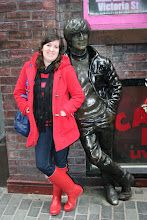
I’m not writing this to brag, but June and July are very busy traveling months for me. From the third week of June to the first week of August, I am only in London for about 10 days.
Besides heading home to Canada in mid-July to sort out my side of the sponsorship Visa, I am also meeting nine of my best friends in the south of France to celebrate the beginning of our third decades – or, less eloquently, our dirty thirties.
But before both of these big adventures (which I will write about in future blogs), I have just returned from a trip to Portugal, which was an exhausting, fun and perfect combination of work and pleasure.
Now, the first time I traveled to Portugal I mainly expected to find a country that resembled the larger landmass to its direct east. I’m not the biggest fan of Spain – mostly due to the fact that my sister and I were robbed there during the backpacking adventure of 2004 – so you can imagine how surprised I was to fall in love with Portugal. Turned out the country, famous for its mouth-watering pastries, passion for football and stoic symbolic roosters, is pretty damn unique.
So I was thrilled to find out that my magazine’s annual Employee Benefits Summit, which has been held in Monte Carlo the past two years and in Spain before that, was being held in Sintra, Portugal, and even more thrilled when I found out I got to go along. My publisher sourced a beautiful five-star Ritz-Carlton-owned hotel called the Penha Longa Hotel Spa and Golf Resort.
I arrived last Wednesday morning on a rather rough 7:30am flight out of Heathrow, with my colleagues Nicky, Tynan, Pete, Lucy and Lorraine, as well as 40 of the summit’s delegates. Before long we had de-boarded in humid Lisbon and were herding the weary, but excited, delegates to an air-conditioned bus. Shortly after that we were pulling up to utter paradise.
The resort grounds – which includes an internationally recognized golf course, outdoor pool, sprawling forest, restaurants, hotel and 15th century monastery – are all set about 20 minutes from the fairytale village of Sintra, where medieval Portuguese kings would summer and Lord Byron called an “Eden”.
Delegates were welcomed by the whole EB team, sipping drinks on a balcony overlooking the monastery where the conference sessions would be held. That gathering, followed by an al fresco lunch, kicked off two days of sessions on a variety of hot topics in the industry, including total reward, the 2012 pension reforms and sickness absence, and a very busy time for both EB staff and delegates.
By Thursday evening’s black-tie gala we were all fairly exhausted, and the champagne, wine, and exquisite food (coquille St. Jacques tartare – raw scallops – with crème fraiche and Tobiko sauce; a lovely tender steak with potato, mushrooms, bacon, chestnuts and red wine jus; a fine sampling of Portuguese cheeses, and a dessert which I seem to have forgotten – obviously too enamoured of my first three courses) went down fairly easily. From the gala in the monastery to the golf course for more drinks, it turned into a rather late one, as the stragglers finished off Super Bok beers in the hotel lobby around 4:30am.
The next day, rebelling against my all-consuming hangover, I recruited Nicky for a visit to Sintra. I had never visited the town, a UNESCO World Heritage site on account of its 19th century Romantic architecture, and the fresh air and stunning scenery sorted me out immediately. We wandered around the adorable village, saw the Palacio Nacional with its twin chimneys, and climbed up through a natural park to see the Pena Palace and the Castelos dos Mouros (Moorish Castle) from the 8th and 9th centuries.
Back at the hotel we had just enough time to rinse off the sweat and dirt gathered from the three-mile hike, then met the rest of the EB team (or those who had not yet returned to London) for a short drive to Bar Guincho on the coast. It was the perfect evening to end the summit, sipping mojitos and Sagres as the sun set over the sand, swapping stories about the event, and feasting on black pork, dried cod and burgers.
Nicky and I awoke the next morning the only two members of our team still at the hotel. We spent a couple of hours lying by the pool, taking a few dips, enjoying the scorching sunshine, and stuffing ourselves with melon pieces and frozen marshmallows passed around by the cute pool boys. Eventually, we had to get on with our day, so we ordered a taxi, waved goodbye to the Penha Longa, and were soon en route to Lisbon.
Though my memories of Lisbon were somewhat patchy – we’re going back 7 years and probably one of the wildest few days of the our Europe trip – I barely got lost taking us to our pensione. Okay, I did get properly lost, but that is one of the best ways to explore the city’s narrow, cobblestoned streets. And we were climbing up to one of Lisbon’s steepest districts, the Bairrio Alto, which is a challenge even without 35-degree weather and pull-y suitcases.
We dropped off our gear in our tiny double room (€20 each) and headed back out to explore the Bairrio Alto, Chiado and Rossio districts, first by cable car then by foot. After a few café stops for combinations of espresso, fresh lemonade and beers, we found the Cervejaria Trindade, the oldest brewery in Portugal, where monks were brewing beer and cooking authentic local food in the 13th century.
We sat in the cloisters, sampling the home brew, stuffing ourselves with homemade bread, quejo (cheese) and olive spread, then ordered some dinner. For Nicky, Lombo de Salmao a Monsignor – salmon fillet roasted on a bed of potatoes, cushioned with brown crab vinaigrette – and for me, Acorda de Gambas a Moda do Popa – bread soaked in olive oil and coriander, garnished with prawns and an egg yolk. We were so happy.
Though exhausted from a grueling summit schedule, the previous day’s hike through Sintra, and the energy-depleting humidity of the city, we made one last stop before retiring to our little pensione. At the Solar do Vinho do Porto we sampled a delicious 1988 Calem Colheita port in exquisite air conditioning.
The following day we had an early rise following a restless night that was tempered with stifling heat and every sound you could imagine coming through our open window (Festas do Lisboa is on, not that this city needs an excuse to party). Determined to get the most of our last day in Portugal, we took a cable car through the Alfama district to explore the castelo, with striking views of the terracotta-ed roofed city below and the Rio Teja that curves along its harbour.
Finally, fed up with the ridiculous heat and feeling fairly disgusting, we picked up our suitcases at the train station and caught a bus out to the airport. It was a very full five days in Portugal, from the five-star lushness of the Penha Longo and a fantastic EB summit, to the bustling, steaming passages of Lisbon.
That’s trip one of three down. Now the countdown begins to this Saturday when I meet up with my best ladies in the south of France for a lively week of beaches, wineries, bread and cheese. I am such a lucky girl!
Wednesday, 29 June 2011
Monday, 16 May 2011
Embracing my inner carnivore
Based on all the adventurous meat I have consumed over the past couple of months it is hard to believe that I spent a large portion of my teen years as a vegetarian. When I have some duck confit or a tender steak in my mouth I really wonder what the hell I was thinking.
I wouldn’t say I was a boring eater before I moved to London but I certainly was predictable. I never ordered fish or red meat off a menu, instead safely taking cues from my veggie days with risottos and pasta dishes, occasionally choosing a bird, and almost always picking the cheapest main I could find.
You see, I had serious issues spending money on eating out. I felt that dropping roundabouts $50 on a meal that, to be completely crude, would slowly pass out of my system within a few hours, was a colossal waste of money. But now it is one of my absolutely favourite ways to spend my hard-earned cash.
I have to give some credit to my friend Paul for converting me. When I visited him in Paris last October he introduced me to the most stimulating and satisfying gastronomies I had ever eaten. That trip truly made me fall in love with food all over again. And, since he is a chef, he even did some cooking for me when he was visiting London.
Paul also took me out to my first Michelin-starred restaurant, the Ledbury in Notting Hill. Another first was the amount of money spent on the meal, just over £250, but it was totally worth it. The Ledbury entered the S. Pellegrino World’s 50 Best Restaurants list at 34 this year. Compiled by more than 800 restaurateurs, chefs, food writers and gastronomes from around the world, the list is considered among the highest praise in the restaurant world.
The food was divine. There were amuse bouches of fois gras mousse in filo cups and soft-boiled quail’s eggs in mushroom puree. I ate more fois gras – my favourite thing, I don’t care about the poor goose – for my starter, in a terrine with cooked and raw apple sake. My main was loin of deer with chanterelles and pumpkin sauce. Next was a pre-dessert of malted chocolate on a bed of cookie crumbs, followed by a selection of mango, green apple and blueberry sorbet, and topped off with a lovely glass of Oban single malt scotch. I am getting ravenous just thinking about it.
For my 30th birthday I had reservations with some friends at St. John Bar and Restaurant in Smithfield, which is 41 on the S. Pellegrino list. English chef Fergus Henderson has been praised for his use of offal (entrails and internal organs of a butchered animal) and other neglected cuts, and for his philosophy of nose to tail eating. Needless to say, it is not the ideal spot for a vegetarian to dine, though there are a few lovely non-meat dishes on the menu.
Among the six of us, there were starters of lamb tongues, bread and green sauce; purple sprouting broccoli vinaigrette; smoked sprats, potato and dill; cold roast middlewhite and dandelion; and welsh rarebit. The mains were roast mutton, lentils and wild garlic; skate, bread and capers; crispy duck and dandelions; and calf’s liver and shallots.
Since March I have had the chance to try out a couple of exciting restaurants through work lunches. The first was Quo Vardis in Soho, which has been around since 1926 and was at its most trendy in the 90s when Marco Pierre White was chef. I opened the meal with steak tartare and then had my first-ever braised ox cheeks with mashed potato and kale. Surprisingly tender and melt-in-my-mouth delectable.
Lunch at Pearl by Jun Tanaka in Holborn came next. Executive chef Jun Tanaka is not yet 30 and has worked at seven Michelin-starred restaurants where he perfected the art of French cuisine. To start I had smoked Challans duck breast with puy lentil salad, plum puree and stuffed neck. Then I had roast saddle of lamb with spinach and pine nuts, herb couscous and wild garlic. Dessert was a peanut mousse with salted caramel, banana and passion fruit sorbet. Oh my god, it was unbelievable. I didn’t get a whole lot done that afternoon.
Besides the piles and piles of meat I have been sampling, including my first tastes of steak tartare, duck confit, venison, lamb tongues and ox cheeks, I have also taken my first run at cooking fish. Last week I baked haddock with a mint and walnut pesto crust and, if I’m allowed to say so, it was kind of delicious.
Next up, I am going to really take on a challenge and try to cook proper red meat for the first time, maybe a pork loin, a lamb shank or a slab of steak. I’ll let you know how it goes, or maybe I will invite you over to eat some.
I wouldn’t say I was a boring eater before I moved to London but I certainly was predictable. I never ordered fish or red meat off a menu, instead safely taking cues from my veggie days with risottos and pasta dishes, occasionally choosing a bird, and almost always picking the cheapest main I could find.
You see, I had serious issues spending money on eating out. I felt that dropping roundabouts $50 on a meal that, to be completely crude, would slowly pass out of my system within a few hours, was a colossal waste of money. But now it is one of my absolutely favourite ways to spend my hard-earned cash.
I have to give some credit to my friend Paul for converting me. When I visited him in Paris last October he introduced me to the most stimulating and satisfying gastronomies I had ever eaten. That trip truly made me fall in love with food all over again. And, since he is a chef, he even did some cooking for me when he was visiting London.
Paul also took me out to my first Michelin-starred restaurant, the Ledbury in Notting Hill. Another first was the amount of money spent on the meal, just over £250, but it was totally worth it. The Ledbury entered the S. Pellegrino World’s 50 Best Restaurants list at 34 this year. Compiled by more than 800 restaurateurs, chefs, food writers and gastronomes from around the world, the list is considered among the highest praise in the restaurant world.
The food was divine. There were amuse bouches of fois gras mousse in filo cups and soft-boiled quail’s eggs in mushroom puree. I ate more fois gras – my favourite thing, I don’t care about the poor goose – for my starter, in a terrine with cooked and raw apple sake. My main was loin of deer with chanterelles and pumpkin sauce. Next was a pre-dessert of malted chocolate on a bed of cookie crumbs, followed by a selection of mango, green apple and blueberry sorbet, and topped off with a lovely glass of Oban single malt scotch. I am getting ravenous just thinking about it.
For my 30th birthday I had reservations with some friends at St. John Bar and Restaurant in Smithfield, which is 41 on the S. Pellegrino list. English chef Fergus Henderson has been praised for his use of offal (entrails and internal organs of a butchered animal) and other neglected cuts, and for his philosophy of nose to tail eating. Needless to say, it is not the ideal spot for a vegetarian to dine, though there are a few lovely non-meat dishes on the menu.
Among the six of us, there were starters of lamb tongues, bread and green sauce; purple sprouting broccoli vinaigrette; smoked sprats, potato and dill; cold roast middlewhite and dandelion; and welsh rarebit. The mains were roast mutton, lentils and wild garlic; skate, bread and capers; crispy duck and dandelions; and calf’s liver and shallots.
Since March I have had the chance to try out a couple of exciting restaurants through work lunches. The first was Quo Vardis in Soho, which has been around since 1926 and was at its most trendy in the 90s when Marco Pierre White was chef. I opened the meal with steak tartare and then had my first-ever braised ox cheeks with mashed potato and kale. Surprisingly tender and melt-in-my-mouth delectable.
Lunch at Pearl by Jun Tanaka in Holborn came next. Executive chef Jun Tanaka is not yet 30 and has worked at seven Michelin-starred restaurants where he perfected the art of French cuisine. To start I had smoked Challans duck breast with puy lentil salad, plum puree and stuffed neck. Then I had roast saddle of lamb with spinach and pine nuts, herb couscous and wild garlic. Dessert was a peanut mousse with salted caramel, banana and passion fruit sorbet. Oh my god, it was unbelievable. I didn’t get a whole lot done that afternoon.
Besides the piles and piles of meat I have been sampling, including my first tastes of steak tartare, duck confit, venison, lamb tongues and ox cheeks, I have also taken my first run at cooking fish. Last week I baked haddock with a mint and walnut pesto crust and, if I’m allowed to say so, it was kind of delicious.
Next up, I am going to really take on a challenge and try to cook proper red meat for the first time, maybe a pork loin, a lamb shank or a slab of steak. I’ll let you know how it goes, or maybe I will invite you over to eat some.
Sunday, 1 May 2011
The Royal Wedding
I have been in the midst of some serious crowds in my day. Numerous Canada Days in Ottawa, the Palio in Siena, the chaos of music festivals, not to mention working right around the corner from Oxford Street which is overflowing even during the tourist-light months. But none of that compares to being one of the million-strong mass under the balcony in front of Buckingham Palace on Friday, 29 April when the royal newlyweds kissed for the first time as man and wife.
My work colleagues were teasing me for getting so excited about the Royal Wedding. None of them were going to head down around Westminster Abbey or Buckingham Palace for the bank holiday, choosing instead to watch the wedding on TV, attend a street party, or ignore the day altogether. I think, whether you’re a royalist or a republican, the historic magnitude of watching the first day of the next generation of the royal family was an opportunity not to be missed. But maybe that’s just the Commonwealth-raised anglophile in me.
My friend Lexie is visiting from Canada, and I have to give her credit for being the force behind our plans that day. At 7am, I met up with Lex, her brother James and his girlfriend Hilary, sister Poppy, and mom Christiane, in front of Green Park station. We were well prepared for any weather (it is the UK after all), and equipped with a cooler of snacks and Pimm’s, and fold-out camping chairs. We were not as festively dressed as some – there were many brides out there, Union Jack-inspired costumes and even a few Kate and Wills – but we were ready for anything.
We went through the park towards Buckingham Palace where there were quite a lot of fences up blocking the way through to the gates. People were already kicking off and shouting at the security cards so we did eventually get access to what was previously going to just be the media bullpen. Once we had found a spot across from the balcony and set up our chairs, we got ready for a four-hour wait until the wedding and a six-hour wait until the couple was to appear on the balcony.
I have to say that the wait wasn’t all that bad. The weather was pleasant, we made some new friends in our area, we had snacks and drinks, and the media set-ups provided lots of entertainment. I stalked Matt Lauer and Meredith Viera where the Today Show coverage was being filmed, saw Fearn Cotton shooting spots for the BBC, and even got interviewed by Mary Hart for Entertainment Tonight – though our bit was apparently cut.
Just after half-ten we saw the Queen and Prince Philip depart for the wedding. She looked lovely in yellow but didn’t smile much while Philip had an absurd but endearing smile plastered on his face. Apparently, by this time, Prince William and brother Harry had already traveled from Clarence House to the Abbey, followed closely by the Prince of Wales and Duchess of Cornwall (Chuck and CPB).
Soon the loudspeakers around the Palace began playing music as Kate, her father and her sister Pippa arrived at the Abbey, and the four-minute procession up the aisle began. We heard the whole ceremony echoing around us and, I swear, the clouds parted and the sun came out. We popped open the Pimm’s and toasted the royal couple as they became husband and wife, that moment when millions around London, and billions around the world, erupted into cheers and applause.
More waiting was then in store for us as Kate and Wills (now the Duke and Duchess of Cambridge) climbed into their ornate carriage and led a procession from the Abbey, up Whitehall, through the House Guards and along the Mall to Buckingham Palace. As the procession progressed the gates holding back the crowds were gradually removed, and throngs of people waving Union Jack flags came flooding towards the Palace. It seriously looked like the plebes storming the Bastille in 1789. I was terrified as they came closer and closer.
But we were still in good position and, when the royal couple came out on the famous balcony, we had a great view. I don’t need to tell you what happened after that, since I’m sure it was covered in the media around the world. There were a couple of kisses, a scowling little bridesmaid, the RAF jets overhead, and a grumpy Queen who eventually decided she had had enough and seemed to make everyone but Kate and Wills go inside.
And then the newlyweds clasped hands, turned away from us, and Kate looked back one more time to see the millions of people gazing up at her. Scoff if you must, but it was truly a significant moment in history and I felt very moved to be a part of it. The events of the whole day are something I will be able to tell my children and my grandchildren in years to come.
My work colleagues were teasing me for getting so excited about the Royal Wedding. None of them were going to head down around Westminster Abbey or Buckingham Palace for the bank holiday, choosing instead to watch the wedding on TV, attend a street party, or ignore the day altogether. I think, whether you’re a royalist or a republican, the historic magnitude of watching the first day of the next generation of the royal family was an opportunity not to be missed. But maybe that’s just the Commonwealth-raised anglophile in me.
My friend Lexie is visiting from Canada, and I have to give her credit for being the force behind our plans that day. At 7am, I met up with Lex, her brother James and his girlfriend Hilary, sister Poppy, and mom Christiane, in front of Green Park station. We were well prepared for any weather (it is the UK after all), and equipped with a cooler of snacks and Pimm’s, and fold-out camping chairs. We were not as festively dressed as some – there were many brides out there, Union Jack-inspired costumes and even a few Kate and Wills – but we were ready for anything.
We went through the park towards Buckingham Palace where there were quite a lot of fences up blocking the way through to the gates. People were already kicking off and shouting at the security cards so we did eventually get access to what was previously going to just be the media bullpen. Once we had found a spot across from the balcony and set up our chairs, we got ready for a four-hour wait until the wedding and a six-hour wait until the couple was to appear on the balcony.
I have to say that the wait wasn’t all that bad. The weather was pleasant, we made some new friends in our area, we had snacks and drinks, and the media set-ups provided lots of entertainment. I stalked Matt Lauer and Meredith Viera where the Today Show coverage was being filmed, saw Fearn Cotton shooting spots for the BBC, and even got interviewed by Mary Hart for Entertainment Tonight – though our bit was apparently cut.
Just after half-ten we saw the Queen and Prince Philip depart for the wedding. She looked lovely in yellow but didn’t smile much while Philip had an absurd but endearing smile plastered on his face. Apparently, by this time, Prince William and brother Harry had already traveled from Clarence House to the Abbey, followed closely by the Prince of Wales and Duchess of Cornwall (Chuck and CPB).
Soon the loudspeakers around the Palace began playing music as Kate, her father and her sister Pippa arrived at the Abbey, and the four-minute procession up the aisle began. We heard the whole ceremony echoing around us and, I swear, the clouds parted and the sun came out. We popped open the Pimm’s and toasted the royal couple as they became husband and wife, that moment when millions around London, and billions around the world, erupted into cheers and applause.
More waiting was then in store for us as Kate and Wills (now the Duke and Duchess of Cambridge) climbed into their ornate carriage and led a procession from the Abbey, up Whitehall, through the House Guards and along the Mall to Buckingham Palace. As the procession progressed the gates holding back the crowds were gradually removed, and throngs of people waving Union Jack flags came flooding towards the Palace. It seriously looked like the plebes storming the Bastille in 1789. I was terrified as they came closer and closer.
But we were still in good position and, when the royal couple came out on the famous balcony, we had a great view. I don’t need to tell you what happened after that, since I’m sure it was covered in the media around the world. There were a couple of kisses, a scowling little bridesmaid, the RAF jets overhead, and a grumpy Queen who eventually decided she had had enough and seemed to make everyone but Kate and Wills go inside.
And then the newlyweds clasped hands, turned away from us, and Kate looked back one more time to see the millions of people gazing up at her. Scoff if you must, but it was truly a significant moment in history and I felt very moved to be a part of it. The events of the whole day are something I will be able to tell my children and my grandchildren in years to come.
Sunday, 17 April 2011
Afternoon Tea
Afternoon tea is one of those truly English occasions, so uniquely British that it can’t possibly be experienced anywhere else. But to be fair, the first time I had afternoon tea I was a young girl in the exquisite tearoom of the Chateau Laurier hotel in Ottawa. But since it was in Canada, I don’t think it counts. No offense, Mom.
Since I moved over here at the end of 2009 I have had four afternoon tea experiences, each one quite different from the last. But before I get into that, I should probably explain what afternoon tea (or high tea) is all about.
Britain clearly has a long history of drinking tea. The custom did originate in England, but it is said to have been brought over from Portugal by Catherine of Bragança when she married Charles II in 1661.
Afternoon tea is served with a variety of sandwiches, customarily cucumber, egg and cress, fish paste, ham and smoked salmon, and scones, with clotted cream and jam, and usually cakes and pastries. When you have it at a teashop or a hotel, it is traditionally served on a tiered stand.
The credit for the transformation of afternoon tea into a late-afternoon meal is credited to Anna Maria Russell, the 7th Duchess of Bedford, while she was living in Woburn Abbey. In the early 19th century it was customary to only take two meals a day, the latter of which took place around 8pm. The Duchess is said to have complained of a “sinking feeling” in the late afternoon brought on by hunger. Her solution was to take a pot of tea and a light snack. She began to invite friends to join and other social hostesses caught on to the trend. It became a regular activity for the upper classes around 4pm before they took their promenade through Hyde Park.
The term "high tea" was used as a way to distinguish it from “low tea” or afternoon tea. The lower classes adapted the custom as a form of dinner, which is why many Brits today still call their dinner “tea’. The words "high" and "low", however, don’t refer to the social classes, but the tables from which either tea meal was eaten. Low tea was served in a sitting room where low tables, like a coffee table, were placed near sofas or chairs. The word high referred to a dinner table, and it would be loaded with substantial dishes like meats, cheeses and breads.
Today, the high tea and low tea versions have all merged into one. And for the tourists, it is a great afternoon activity.
My very first high tea was in July last year at Cannazaro House in Wimbledon with Lauren, Danni, Nat, Liz and Jenn F-H. It was truly decadent with treats like chocolate éclairs, macaroons and fruit tarts piled on tiered dishes. Of course, there was also the high tea staple of scones, clotted cream and jam. We drank tea – of course – and then washed it all down with some pitchers of Pimm’s.
My next one was at the end of August at a posh London hotel, the Langham in Soho. It was part of a bridal show (both Jenny and Sarah had recently gotten engaged) so it was absolutely gorgeous, decked out to resemble a wedding reception. The tables were draped in white clothes, sparkling chandeliers hung from the ceiling, the dishes were certified china, and then there was the eats. Vanilla custard came first, then the traditional finger sandwiches, followed by non-stop desserts like warm baby scones, shortbread lollies and pink-topped fairy cakes (cupcakes). We ate and ate and ate, and sipped more and more tea into the late afternoon.
For my third high tea I took Paul, who was en route back to Toronto from his year in Paris, to the Aubrey Restaurant at the Kensington Hotel. It was a Christmas-themed tea since it was December. So the sandwich options included a festive selection, like turkey and cranberry sauce, while the cakes and pastries included little mince pies. The standard scone spread was different too, with choices of strawberry jam, clotted cream and lime custard.
My next high tea was this past weekend at the Cadogan Hotel where Lauren had organized a surprise bridal shower for our friend Liz, who is getting married in Chicago in early June. We had our own little area of couches around low tables which Lauren decked out with some wedding-inspired bits. The bride-to-be was dropped off by the groom-to-be, and she was genuinely surprised. Then we ordered our pots of tea and toasted Liz with teaming glasses of champagne. It was a lovely afternoon, with the usual finger sandwiches, scones and cream, and then some fruit tarts, chocolate-dipped strawberries and raspberry mousse.
While I live over here I hope to add more afternoon teas to this already notable list of experiences. If I can afford it, I would love to try the Ritz, the Savoy or Claridge’s. I’ve got some Canadian visitors streaming through in April and May, so I’m sure I will get a chance to do it again soon.
Since I moved over here at the end of 2009 I have had four afternoon tea experiences, each one quite different from the last. But before I get into that, I should probably explain what afternoon tea (or high tea) is all about.
Britain clearly has a long history of drinking tea. The custom did originate in England, but it is said to have been brought over from Portugal by Catherine of Bragança when she married Charles II in 1661.
Afternoon tea is served with a variety of sandwiches, customarily cucumber, egg and cress, fish paste, ham and smoked salmon, and scones, with clotted cream and jam, and usually cakes and pastries. When you have it at a teashop or a hotel, it is traditionally served on a tiered stand.
The credit for the transformation of afternoon tea into a late-afternoon meal is credited to Anna Maria Russell, the 7th Duchess of Bedford, while she was living in Woburn Abbey. In the early 19th century it was customary to only take two meals a day, the latter of which took place around 8pm. The Duchess is said to have complained of a “sinking feeling” in the late afternoon brought on by hunger. Her solution was to take a pot of tea and a light snack. She began to invite friends to join and other social hostesses caught on to the trend. It became a regular activity for the upper classes around 4pm before they took their promenade through Hyde Park.
The term "high tea" was used as a way to distinguish it from “low tea” or afternoon tea. The lower classes adapted the custom as a form of dinner, which is why many Brits today still call their dinner “tea’. The words "high" and "low", however, don’t refer to the social classes, but the tables from which either tea meal was eaten. Low tea was served in a sitting room where low tables, like a coffee table, were placed near sofas or chairs. The word high referred to a dinner table, and it would be loaded with substantial dishes like meats, cheeses and breads.
Today, the high tea and low tea versions have all merged into one. And for the tourists, it is a great afternoon activity.
My very first high tea was in July last year at Cannazaro House in Wimbledon with Lauren, Danni, Nat, Liz and Jenn F-H. It was truly decadent with treats like chocolate éclairs, macaroons and fruit tarts piled on tiered dishes. Of course, there was also the high tea staple of scones, clotted cream and jam. We drank tea – of course – and then washed it all down with some pitchers of Pimm’s.
My next one was at the end of August at a posh London hotel, the Langham in Soho. It was part of a bridal show (both Jenny and Sarah had recently gotten engaged) so it was absolutely gorgeous, decked out to resemble a wedding reception. The tables were draped in white clothes, sparkling chandeliers hung from the ceiling, the dishes were certified china, and then there was the eats. Vanilla custard came first, then the traditional finger sandwiches, followed by non-stop desserts like warm baby scones, shortbread lollies and pink-topped fairy cakes (cupcakes). We ate and ate and ate, and sipped more and more tea into the late afternoon.
For my third high tea I took Paul, who was en route back to Toronto from his year in Paris, to the Aubrey Restaurant at the Kensington Hotel. It was a Christmas-themed tea since it was December. So the sandwich options included a festive selection, like turkey and cranberry sauce, while the cakes and pastries included little mince pies. The standard scone spread was different too, with choices of strawberry jam, clotted cream and lime custard.
My next high tea was this past weekend at the Cadogan Hotel where Lauren had organized a surprise bridal shower for our friend Liz, who is getting married in Chicago in early June. We had our own little area of couches around low tables which Lauren decked out with some wedding-inspired bits. The bride-to-be was dropped off by the groom-to-be, and she was genuinely surprised. Then we ordered our pots of tea and toasted Liz with teaming glasses of champagne. It was a lovely afternoon, with the usual finger sandwiches, scones and cream, and then some fruit tarts, chocolate-dipped strawberries and raspberry mousse.
While I live over here I hope to add more afternoon teas to this already notable list of experiences. If I can afford it, I would love to try the Ritz, the Savoy or Claridge’s. I’ve got some Canadian visitors streaming through in April and May, so I’m sure I will get a chance to do it again soon.
Monday, 4 April 2011
Cotswold Cottage Weekend
Although I can’t complain about weekend trips around Europe, I am especially keen to stay close to home and get to know England while I am living here. Last spring, as I recounted in a past blog, I headed down to Cornwall for a cottage weekend with some girlfriends.
I have been to a few other counties over the last 20 months, mostly the ‘shires like Oxfordshire, Yorkshire and Hampshire. This past weekend I headed out to Gloucestershire, and the world famous Cotswold’s, for our second annual girls’ cottage weekend.
The Cotswold’s are a range of hills in west-central England also known as the Heart of England. The name apparently translates as “sheep enclosure in rolling hillsides”, incorporating “wold” which means hills. The area is characterized by adorable towns and villages built of the underlying Cotswold stone, a yellow limestone.
Our little cottage was in Stow-on-the-Wold, a market town on the top of an 800-foot hill. It was built of the typical stone and located around the corner from the oldest inn in England, dating back to 974 AD, but its inside was newly renovated and very modern.
It was the perfect base for eight expats (six Canadians, an American and an Aussie) to explore the rustic surroundings but also return to a home with cozy beds, a roaring fireplace and full kitchen. We ate well, we drank well, and we walked for miles and miles through rolling green countryside spotted sporadically with stone villages.
After a post-work train ride from London, equipped with snacks and bottles of vino, we arrived in the Cotswold’s for a relaxing evening in our weekend home. We woke the next morning to the sound of pounding rain on the stone roof and our hopes for a lovely hiking day were temporarily dashed. But after breakfast the rain stopped, the sky cleared and the wellies were no longer necessary.
We set out from Stow-on-the-Wold, following a public footpath through fields of undulating rain-kissed hills, pastures of horse, cow and chicken, and eventually followed the River Windrush into Bourton-on-the-Water. The picturesque town, often known as the Venice of England, was the perfect spot to end our hike and enjoy a pint of local bitter with some fish and chips.
We were shattered from the trek, filled up with beer and battered fish, so after exploring some shops we took a rest in the grass along the river. Too tired to duplicate our hike, we caught the local bus back to our little village.
After some hot showers and baths, couch lounging and food prep, we lit another roaring fire, opened a few more bottles of wine, and tackled a spread of cheese, crackers, meats and olives. Dinner was Mexican – fajitas, homemade guacamole, the works. The eating just went on and on.
The night spun into more bottles of wine and a spontaneous dance party that somehow ended up including costumes. It was a fun ladies’ night, the perfect one after our gorgeous day outside.
With Sunday we knew that only a few hours separated us from our train journey back to the chaos of London. So we went for a local hike and wandered around the village, then stopped at a tearoom for lunch (I had a Welsh rarebit, cheese and Worcestershire sauce on toast) and cream tea (accompanied by fresh scone, jam and clotted cream).
There was a lot of eating and drinking this weekend, but a lot of exercise as well. Not sure if we quite made that perfect balance, but I wouldn’t trade a second of it for anything.
I have been to a few other counties over the last 20 months, mostly the ‘shires like Oxfordshire, Yorkshire and Hampshire. This past weekend I headed out to Gloucestershire, and the world famous Cotswold’s, for our second annual girls’ cottage weekend.
The Cotswold’s are a range of hills in west-central England also known as the Heart of England. The name apparently translates as “sheep enclosure in rolling hillsides”, incorporating “wold” which means hills. The area is characterized by adorable towns and villages built of the underlying Cotswold stone, a yellow limestone.
Our little cottage was in Stow-on-the-Wold, a market town on the top of an 800-foot hill. It was built of the typical stone and located around the corner from the oldest inn in England, dating back to 974 AD, but its inside was newly renovated and very modern.
It was the perfect base for eight expats (six Canadians, an American and an Aussie) to explore the rustic surroundings but also return to a home with cozy beds, a roaring fireplace and full kitchen. We ate well, we drank well, and we walked for miles and miles through rolling green countryside spotted sporadically with stone villages.
After a post-work train ride from London, equipped with snacks and bottles of vino, we arrived in the Cotswold’s for a relaxing evening in our weekend home. We woke the next morning to the sound of pounding rain on the stone roof and our hopes for a lovely hiking day were temporarily dashed. But after breakfast the rain stopped, the sky cleared and the wellies were no longer necessary.
We set out from Stow-on-the-Wold, following a public footpath through fields of undulating rain-kissed hills, pastures of horse, cow and chicken, and eventually followed the River Windrush into Bourton-on-the-Water. The picturesque town, often known as the Venice of England, was the perfect spot to end our hike and enjoy a pint of local bitter with some fish and chips.
We were shattered from the trek, filled up with beer and battered fish, so after exploring some shops we took a rest in the grass along the river. Too tired to duplicate our hike, we caught the local bus back to our little village.
After some hot showers and baths, couch lounging and food prep, we lit another roaring fire, opened a few more bottles of wine, and tackled a spread of cheese, crackers, meats and olives. Dinner was Mexican – fajitas, homemade guacamole, the works. The eating just went on and on.
The night spun into more bottles of wine and a spontaneous dance party that somehow ended up including costumes. It was a fun ladies’ night, the perfect one after our gorgeous day outside.
With Sunday we knew that only a few hours separated us from our train journey back to the chaos of London. So we went for a local hike and wandered around the village, then stopped at a tearoom for lunch (I had a Welsh rarebit, cheese and Worcestershire sauce on toast) and cream tea (accompanied by fresh scone, jam and clotted cream).
There was a lot of eating and drinking this weekend, but a lot of exercise as well. Not sure if we quite made that perfect balance, but I wouldn’t trade a second of it for anything.
Monday, 21 March 2011
Scandinavia’s Culinary Revolution
I loved my visit to Oslo so much that I just had to write another blog about it. Exploring my desire to be a food journalist (combining my two great loves – eating and writing), and inspired by a birthday present from my roomie (Will Write for Food: The Complete Guide to Writing Cookbooks, Restaurant Reviews, Articles, Memoir, Fiction and More), I want to expand on the distinctive food produced in Norway and the growing reputation of Scandinavia’s hot young chefs.
Beginning in the early ‘90s, Norwegians began to take their place among the most brilliant culinary talents in Europe. The first Norwegian to win the Bocuse d’Or (known as the Concours mondial de la cuisine and frequently referred to as the culinary equivalent of the Olympic Games), was Bent Stiansen in 1993. At the time his win came as a surprise, since the gastronomy tradition of the Scandinavian countries was not as reputed as that of France or Italy. In 2011, the gold, silver and bronze prizes went to Denmark, Sweden and Norway, respectively, cementing northern Europe’s reputation as a producer of outstanding culinary talent.
Restaurants like Feinschmecker, Haga, Oscargate, Statholdergaarden, Oro Bar & Grill, and Restaurant Elk all appear in the Michelin guide today. So a country known as the birthplace of cross-country skiing, Edvard Munch and the Nobel Peace prize, is now also where gastro-enthusiasts will find some of the northern hemisphere’s most adventurous meat and fish dishes. Dried, smoked, salted and fermented, the ways that Norwegians prepare their cod, elk, lamb, trout, reindeer, ham and salmon is plentiful and adventurous.
Like its much larger neighbour to the West, Norway offers snowy mountains, rustic wilderness and a rugged coastline. And also like Canada, the Scandinavian country has a strong focus on game and fish when it comes to local produce.
To find all this produce under one roof I decided to check out Fenaknoken, a traditional food shop recently featured in Conde Nast Traveller. Walking past Oslo’s city hall, the Nobel Peace Centre and the Oslofjord, I found myself at the door of a rustic mountain cabin (or hut as the Norwegians call it) with a stuffed elk nearly licking the side of my face and wooden cross-country skis leaning against the wall. Unbeknown to me, my cousin Kirsti told owner Eirick Braek that I was a Canadian journalist, and he immediately began to pass out pieces of dried mutton, elk, reindeer, goat sausage and ham. (Unfortunately for me, Eirick was all out of bear meat.) Besides its specialties such as fenalår – a salted and cured leg of lamb that Braek held up and announced is shaped like the map of Norway – the shop sells locally produced cheeses, homemade jams (rowan berry jelly), flat bread, dried fruits, and fish of all variety. It is an absolute must-visit if you ever get to Norway.
Other fish dishes that are popular in the country are smoked salmon, dried codfish, salted stockfish, rakfish (disturbingly foul fermented trout that locals see as a delicacy), crabs, lobster and mussels. Traditional fish dishes are torsk, a poached cod served very simply with boiled potatoes and melted butter, and torsketunger, cod’s tongue. Lutefisk is another popular preparation made of stockfish (dried cod or ling) or klippfisk (dried and salted cod) that has been steeped in lye. Fiskesuppe, or fish soup, is a white, milk-based soup with vegetables like carrots, onions, potato and various kinds of fish. The Norwegians also enjoy pickled herring, or sursild, which is often served as an appetizer or on rye bread as a lunch staple.
In terms of game, Norway produces a lot of lamb, moose, reindeer, duck and fowl. Preserved meat and sausages come in a staggering variety of regional varieties, and are accompanied by sour cream dishes or crushed juniper berries on the side.
Traditional meatballs, or kjottkaker, are simpler than the Swedish variety and served in a brown sauce rather than a cream sauce. Farikal, a mutton stew, is mutton and cabbage layered in a deep pot along with black pepper, salt and some wheat flour to thicken the sauce.
Since I was only in Norway for three days I didn’t get to try even a small percentage of the exploratory cuisine that the country has to offer or eat in more than one of the dozens of restaurants that are now regularly rated among the best across Europe. Lucky for me, I have lovely and accommodating family in Norway, and loved it so much I will certainly go back, so there is plenty of time for more adventurous eating ahead.
Beginning in the early ‘90s, Norwegians began to take their place among the most brilliant culinary talents in Europe. The first Norwegian to win the Bocuse d’Or (known as the Concours mondial de la cuisine and frequently referred to as the culinary equivalent of the Olympic Games), was Bent Stiansen in 1993. At the time his win came as a surprise, since the gastronomy tradition of the Scandinavian countries was not as reputed as that of France or Italy. In 2011, the gold, silver and bronze prizes went to Denmark, Sweden and Norway, respectively, cementing northern Europe’s reputation as a producer of outstanding culinary talent.
Restaurants like Feinschmecker, Haga, Oscargate, Statholdergaarden, Oro Bar & Grill, and Restaurant Elk all appear in the Michelin guide today. So a country known as the birthplace of cross-country skiing, Edvard Munch and the Nobel Peace prize, is now also where gastro-enthusiasts will find some of the northern hemisphere’s most adventurous meat and fish dishes. Dried, smoked, salted and fermented, the ways that Norwegians prepare their cod, elk, lamb, trout, reindeer, ham and salmon is plentiful and adventurous.
Like its much larger neighbour to the West, Norway offers snowy mountains, rustic wilderness and a rugged coastline. And also like Canada, the Scandinavian country has a strong focus on game and fish when it comes to local produce.
To find all this produce under one roof I decided to check out Fenaknoken, a traditional food shop recently featured in Conde Nast Traveller. Walking past Oslo’s city hall, the Nobel Peace Centre and the Oslofjord, I found myself at the door of a rustic mountain cabin (or hut as the Norwegians call it) with a stuffed elk nearly licking the side of my face and wooden cross-country skis leaning against the wall. Unbeknown to me, my cousin Kirsti told owner Eirick Braek that I was a Canadian journalist, and he immediately began to pass out pieces of dried mutton, elk, reindeer, goat sausage and ham. (Unfortunately for me, Eirick was all out of bear meat.) Besides its specialties such as fenalår – a salted and cured leg of lamb that Braek held up and announced is shaped like the map of Norway – the shop sells locally produced cheeses, homemade jams (rowan berry jelly), flat bread, dried fruits, and fish of all variety. It is an absolute must-visit if you ever get to Norway.
Other fish dishes that are popular in the country are smoked salmon, dried codfish, salted stockfish, rakfish (disturbingly foul fermented trout that locals see as a delicacy), crabs, lobster and mussels. Traditional fish dishes are torsk, a poached cod served very simply with boiled potatoes and melted butter, and torsketunger, cod’s tongue. Lutefisk is another popular preparation made of stockfish (dried cod or ling) or klippfisk (dried and salted cod) that has been steeped in lye. Fiskesuppe, or fish soup, is a white, milk-based soup with vegetables like carrots, onions, potato and various kinds of fish. The Norwegians also enjoy pickled herring, or sursild, which is often served as an appetizer or on rye bread as a lunch staple.
In terms of game, Norway produces a lot of lamb, moose, reindeer, duck and fowl. Preserved meat and sausages come in a staggering variety of regional varieties, and are accompanied by sour cream dishes or crushed juniper berries on the side.
Traditional meatballs, or kjottkaker, are simpler than the Swedish variety and served in a brown sauce rather than a cream sauce. Farikal, a mutton stew, is mutton and cabbage layered in a deep pot along with black pepper, salt and some wheat flour to thicken the sauce.
Since I was only in Norway for three days I didn’t get to try even a small percentage of the exploratory cuisine that the country has to offer or eat in more than one of the dozens of restaurants that are now regularly rated among the best across Europe. Lucky for me, I have lovely and accommodating family in Norway, and loved it so much I will certainly go back, so there is plenty of time for more adventurous eating ahead.
Sunday, 6 March 2011
Winter Wonderland in Norway
I have been physically aching for the snow. This might be hard to believe if you are in Canada, buried under it and longing for the Spring thaw, or in London, where a couple of snowfalls have crippled the city, but I am a winter lover through and through and what is referred to as winter over here is just not cutting it.
So I landed in Norway last Thursday for a long weekend of winter. I didn’t know quite what to expect of my first visit to the Scandinavian countries but, on my express bus ride from Rygge airport – diverted from Torp due to weather conditions and poor visibility – to Oslo, I gazed out at snow-capped mountains and white landscapes dotted with colourful cabins, and I fantasized that I was in Canada.
Though I didn’t plan it, my visit coincided with the 2011 World Nordic Ski Championships at the famous Holmenkommen. The city was filled with cross-country ski enthusiasts from all over Europe – and even Canada. Flags were waved in the streets, tourists and locals packed onto the subway with their skis, and there was a general patriotic atmosphere everywhere we went.
I was finally paying a visit to my Norwegian cousins who I met for the first time in the UK at Easter last year and then again in Tiree in August. I was staying with Kirsti and Henning and their sons Martin (9) and Jonathan (7). Kirsti is the daughter of my grandfather’s first cousin Liz, who is also from the same brood of cousins as Pearl and Mary. Liz met Norwegian Paul at university in Glasgow and has been living in the country since she was 22 (she was 70 last year).
My weekend in Oslo included more than just the snow appreciation that I want to write about here. I visited the Munch Museum, the Vegland sculpture park, the Nobel Prize Centre, and wandered along the Oslofjord. Besides the most incredible Nordic ski of my life, which I will get to in a minute, my favourite stop of the weekend was to Fenaknoken, a traditional Norwegian food shop that I had read about in Conde Nast Traveller, and where I sampled some truly unbelievable dried, smoked and salted meats. (I want to write a separate blog about the food in Norway as a hone my skills as a food journalist, so stay tuned.)
But best of all was the skiing. Oh the skiing. I have been in love with cross-country skiing since I was about five. Since then I have been skiing annually with my father in the Gatineau Hills. This past Christmas I was able to squeeze in one of our traditional skis but the days were warming up and the snow was melting. I loved spending that one morning in the woods over the holidays with the echoes off the snow but the conditions were not perfect. Up at Ullevalseter in Oslo, despite the crowds that had descended for the championships, I had the most perfect ski of my life.
Well, if I’m being completely honest, one thing was missing. My Dad. With my borrowed Fischers on, gliding out across the immaculately manicured snow with evergreens towering and shaking their snowflakes down on me, I got choked up. Okay, I cried. I wished my Dad were skiing right beside me. He would have adored that day. I’ll admit, I don’t get homesick very often, but this weekend, I really missed Canada.
We did 11km, the first half almost completely uphill, then we sunned ourselves (yes, I have a lovely winter face burn) outside a chalet with coffees and sweet buns, before precariously making our way downhill. I am pleased to say I only wiped out twice (I have the world’s worst snowplow) but it would have been much more if I hadn’t stuck to the lakes on the return journey.
As I don’t get to keep my cross-country ski muscles in shape, I am feeling all sorts of random aches today. There is a sharp pain on the top of my forearms, shooting along my inner thighs, my butt, my lower back, my hips, my shoulder blades, all around my ribs from sustaining balance, basically everywhere. But I have to say, to subdue that ache I’ve been feeling lately for the snow, all those other aches are well worth it.
So I landed in Norway last Thursday for a long weekend of winter. I didn’t know quite what to expect of my first visit to the Scandinavian countries but, on my express bus ride from Rygge airport – diverted from Torp due to weather conditions and poor visibility – to Oslo, I gazed out at snow-capped mountains and white landscapes dotted with colourful cabins, and I fantasized that I was in Canada.
Though I didn’t plan it, my visit coincided with the 2011 World Nordic Ski Championships at the famous Holmenkommen. The city was filled with cross-country ski enthusiasts from all over Europe – and even Canada. Flags were waved in the streets, tourists and locals packed onto the subway with their skis, and there was a general patriotic atmosphere everywhere we went.
I was finally paying a visit to my Norwegian cousins who I met for the first time in the UK at Easter last year and then again in Tiree in August. I was staying with Kirsti and Henning and their sons Martin (9) and Jonathan (7). Kirsti is the daughter of my grandfather’s first cousin Liz, who is also from the same brood of cousins as Pearl and Mary. Liz met Norwegian Paul at university in Glasgow and has been living in the country since she was 22 (she was 70 last year).
My weekend in Oslo included more than just the snow appreciation that I want to write about here. I visited the Munch Museum, the Vegland sculpture park, the Nobel Prize Centre, and wandered along the Oslofjord. Besides the most incredible Nordic ski of my life, which I will get to in a minute, my favourite stop of the weekend was to Fenaknoken, a traditional Norwegian food shop that I had read about in Conde Nast Traveller, and where I sampled some truly unbelievable dried, smoked and salted meats. (I want to write a separate blog about the food in Norway as a hone my skills as a food journalist, so stay tuned.)
But best of all was the skiing. Oh the skiing. I have been in love with cross-country skiing since I was about five. Since then I have been skiing annually with my father in the Gatineau Hills. This past Christmas I was able to squeeze in one of our traditional skis but the days were warming up and the snow was melting. I loved spending that one morning in the woods over the holidays with the echoes off the snow but the conditions were not perfect. Up at Ullevalseter in Oslo, despite the crowds that had descended for the championships, I had the most perfect ski of my life.
Well, if I’m being completely honest, one thing was missing. My Dad. With my borrowed Fischers on, gliding out across the immaculately manicured snow with evergreens towering and shaking their snowflakes down on me, I got choked up. Okay, I cried. I wished my Dad were skiing right beside me. He would have adored that day. I’ll admit, I don’t get homesick very often, but this weekend, I really missed Canada.
We did 11km, the first half almost completely uphill, then we sunned ourselves (yes, I have a lovely winter face burn) outside a chalet with coffees and sweet buns, before precariously making our way downhill. I am pleased to say I only wiped out twice (I have the world’s worst snowplow) but it would have been much more if I hadn’t stuck to the lakes on the return journey.
As I don’t get to keep my cross-country ski muscles in shape, I am feeling all sorts of random aches today. There is a sharp pain on the top of my forearms, shooting along my inner thighs, my butt, my lower back, my hips, my shoulder blades, all around my ribs from sustaining balance, basically everywhere. But I have to say, to subdue that ache I’ve been feeling lately for the snow, all those other aches are well worth it.
Subscribe to:
Posts (Atom)